Quick Read
The ideal hair mask for oily scalp problems in winter should moisturise dry hair rather than grease the scalp. The secret to healthier hair in winter is all about the lightness of hydration, a balancing act of ingredients and proper application techniques.
Key Takeaways
- Oily scalp and dry hair length problems are common during the winter season.
- The right hair mask for an oily scalp should avoid clogging up the roots.
- Lightweight oils and natural ingredients are ideal for nourishing your hair in balance.
- Only mid-lengths and ends should be treated with the use of a mask to avoid excess oiliness of the scalp.
- Regular hair care helps the scalp balance during the winter months.
- Essensuals Salon recommends a personalised hair care plan according to the texture of the scalp and hair.
When Your Scalp Feels Oily but Your Hair Feels Dry
Winter hair woes are baffling. Your scalp can get oily within one day, and the rest of your hair might get rough, dry and hard to manage. This imbalance occurs more commonly than most people think, particularly in colder weather, when the weather has a different effect on the scalp and hair.
The reasons for an oily scalp are due to the production of too much oil in the sebaceous glands, and the reasons for dry lengths are due to moisture loss and environmental stresses. The problem is that hair masks for oily and greasy scalps will help to hydrate the hair, but not make the roots heavier.
A lot of people have the tendency to apply rich, heavy masks from root to tip. This can make ends soft in the short term but can also make the scalp greasier quicker. The answer is to select light and nourishing ingredients and use them in the right places.
Here are five hair masks you can use to help your hair retain moisture in the winter, some tips from the experts, common mistakes to avoid, and how Essensuals Salon addresses the needs of the scalp in the winter season.
Discover Balanced Winter Hair Care with Essensuals Salon
At Essensuals Salon, hair care is not a one-size-fits-all affair. With an oily scalp and dry lengths, special treatment is needed to balance the two without removing natural moisture.
It’s all about learning what your hair really requires, whether through individual or customised consultations, seasonal hydration therapies or expert scalp analysis. When picking a hair mask for oily scalp problems, it’s important to focus on these as well as on helping to keep hair looking healthy through the winter.
Why Winter Makes Oily Scalp and Dry Lengths Worse
Your scalp and hair would react differently in cold weather. Your scalp may still be oily, although the winter air and heating in the home tend to dry out your hair.
Reduced Moisture in the Air
Hair is more likely to lose moisture during winter because there is less humidity in the air. This is particularly evident on the mid-lengths and ends.
What Happens to Hair During Winter?
Hair becomes coarser and frizzier.
Expansion joints begin to crack. Expansion joints start to crack.
Shine reduces noticeably
Static & tangles build up.
As a result, the scalp may also continue to be seborrhoeic, resulting in an uncomfortable imbalance.
Overwashing Makes the Problem Worse
A lot of people shampoo their hair more often to control oiliness. But over-washing hair may remove the moisture from the scalp and stimulate further oil secretion.
This is one of the reasons why selecting the appropriate hair mask for an oily scalp is important; it needs to balance out instead of adding any extra dryness or oiliness.
What Makes a Good Hair Mask for an Oily Scalp?
Not all hair masks are effective against oily roots, #4). Others contain too much oil and grease, leaving the scalp clogged after just a few hours.
Lightweight Hydration Matters
The most important thing when choosing a mask is that it can nourish dry lengths without adding weight.
Ingredients That Work Well
| Ingredient | Benefit |
| Aloe Vera | Hydrates without heaviness |
| Yoghurt | Balances scalp oil |
| Green Tea | Refreshes and soothes the scalp |
| Argan Oil | Softens dry ends lightly |
| Clay | Helps absorb excess oil |
Avoid Heavy Ingredients Near the Scalp
Some heavy oils and silicone-based products can aggravate the oiliness.
Common Ingredients to Use Carefully
- Heavy butter-based masks
- Excess coconut oil on the scalp
- Thick silicone formulations
- The masks are very rich and are made overnight.
The ideal hair mask for oily hair should prioritise moisture over heavy oiliness.
5 Best Hair Masks for Oily Scalp and Dry Lengths
Managing oily roots and dry lengths during winter can be difficult because your scalp and hair ends need completely different care. The ideal mask should hydrate rough lengths without making the scalp greasy or heavy. These hair masks are designed to maintain that balance while improving softness, freshness, and manageability during colder months.
1. Aloe Vera and Green Tea Mask for Lightweight Hydration
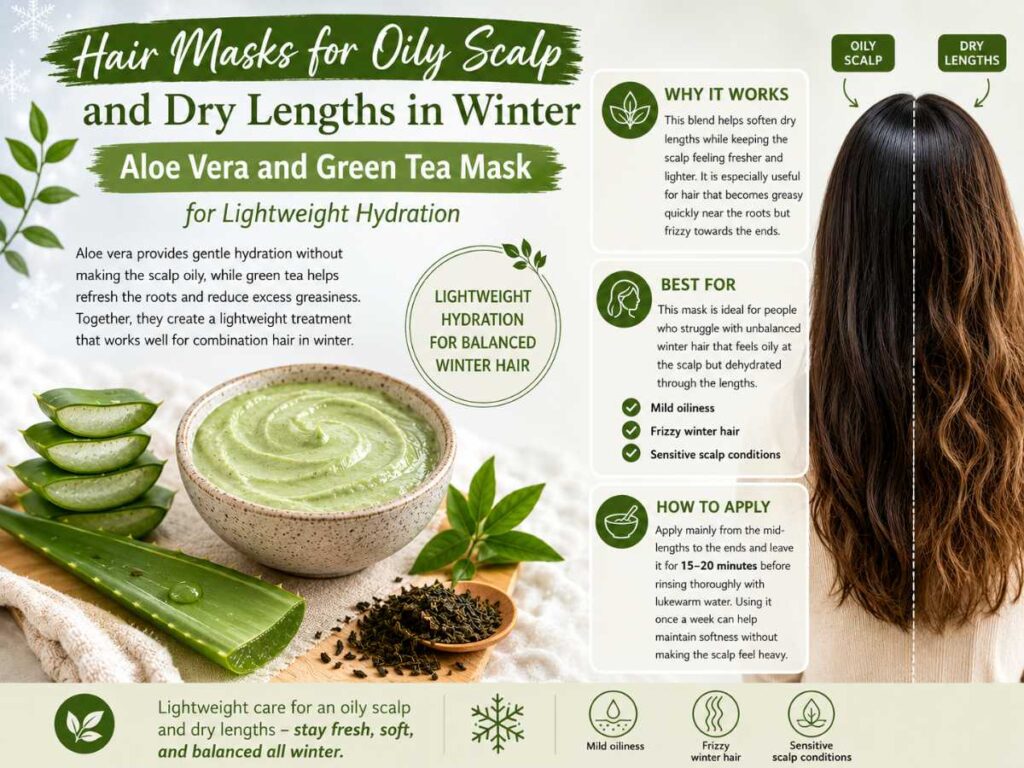
Aloe vera provides gentle hydration without making the scalp oily, while green tea helps refresh the roots and reduce excess greasiness. Together, they create a lightweight treatment that works well for combination hair during winter.
Why It Works
This blend helps soften dry lengths while keeping the scalp feeling fresher and lighter. It is especially useful for hair that becomes greasy quickly near the roots but frizzy towards the ends.
Best For
This mask is ideal for people who struggle with unbalanced winter hair that feels oily at the scalp but dehydrated through the lengths.
- Mild oiliness
- Frizzy winter hair
- Sensitive scalp conditions
How to Apply
Apply mainly from the mid-lengths to the ends and leave for 15–20 minutes before rinsing thoroughly with lukewarm water. Using it once a week can help maintain softness without making the scalp feel heavy.
2. Yoghurt and Honey Mask for Balanced Nourishment
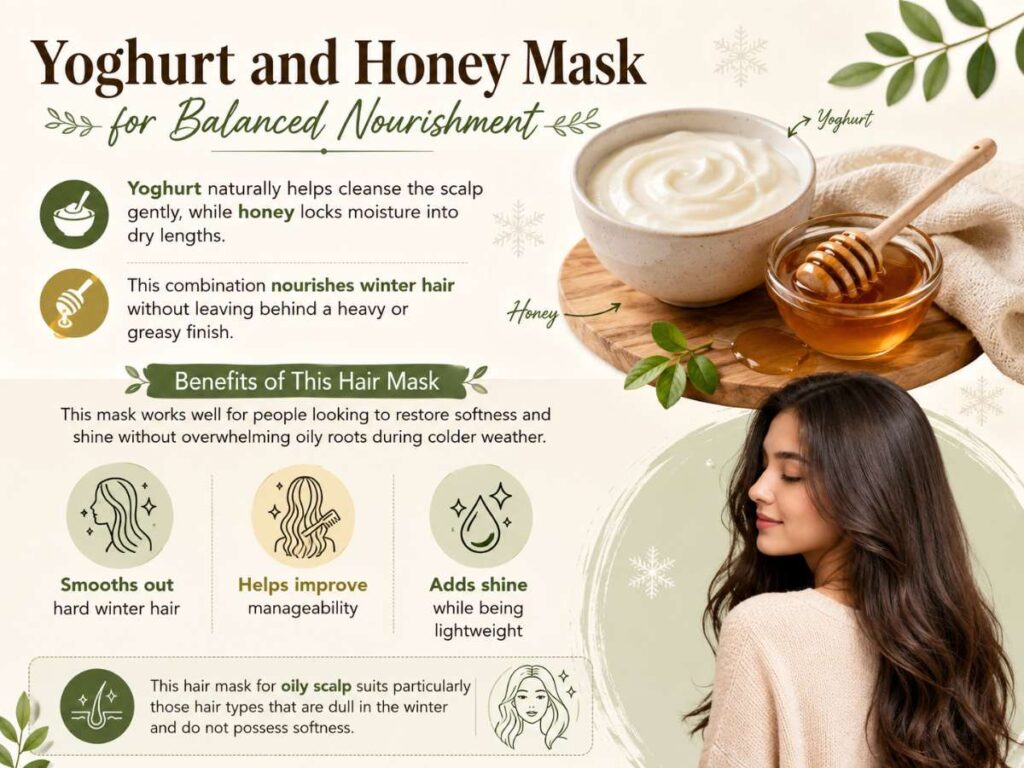
Yoghurt naturally helps cleanse the scalp gently, while honey locks moisture into dry lengths. This combination nourishes winter hair without leaving behind a heavy or greasy finish.
Benefits of This Hair Mask
This mask works well for people looking to restore softness and shine without overwhelming oily roots during colder weather.
- Smooths out hard winter hair
- Helps improve manageability
- Adds shine while being lightweight
This hair mask for oily scalp suits particularly those hair types that are dull in the winter and do not possess softness.
3. Clay and Tea Tree Mask for Scalp Refreshing
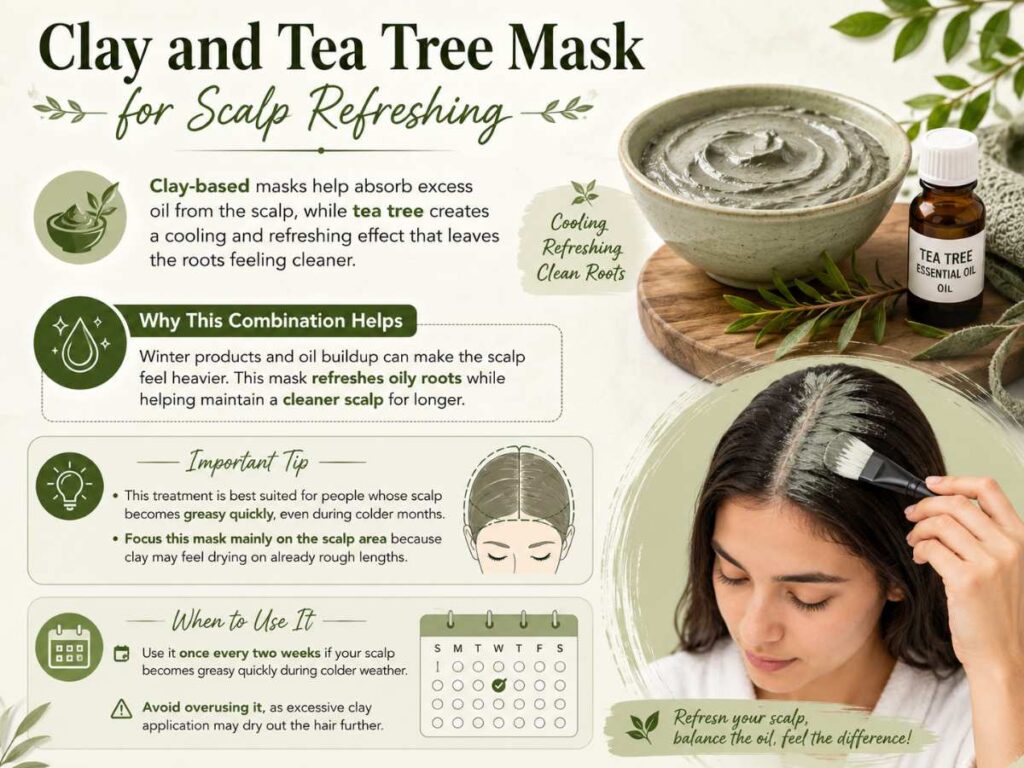
Clay-based masks help absorb excess oil from the scalp, while tea tree creates a cooling and refreshing effect that leaves the roots feeling cleaner.
Why This Combination Helps
Winter products and oil buildup can make the scalp feel heavier. This mask refreshes oily roots while helping maintain a cleaner scalp for longer.
Important Tip
- This treatment is best suited for people whose scalp becomes greasy quickly, even during colder months.
- Focus this mask mainly on the scalp area because clay may feel drying on already rough lengths.
When to Use It
Use it once every two weeks if your scalp becomes greasy quickly during colder weather. Avoid overusing it, as excessive clay application may dry out the hair further.
4. Banana and Argan Oil Mask for Dry Ends
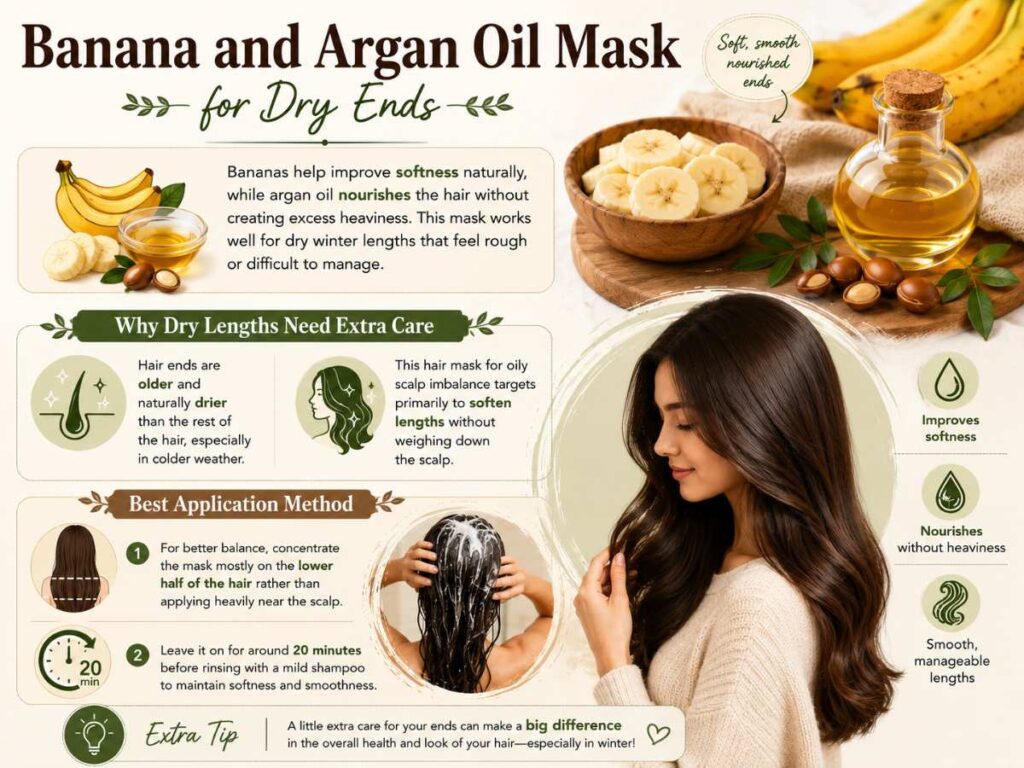
Bananas help improve softness naturally, while argan oil nourishes the hair without creating excess heaviness. This mask works well for dry winter lengths that feel rough or difficult to manage.
Why Dry Lengths Need Extra Care
- Hair ends are older and naturally drier than the rest of the hair, especially in colder weather.
- This hair mask for oily scalp imbalance targets primarily to soften lengths without weighing down the scalp.
Best Application Method
- For better balance, concentrate the mask mostly on the lower half of the hair rather than applying heavily near the scalp.
- Leave it on for around 20 minutes before rinsing with a mild shampoo to maintain softness and smoothness.
5. Oat Milk and Aloe Mask for Sensitive Winter Hair
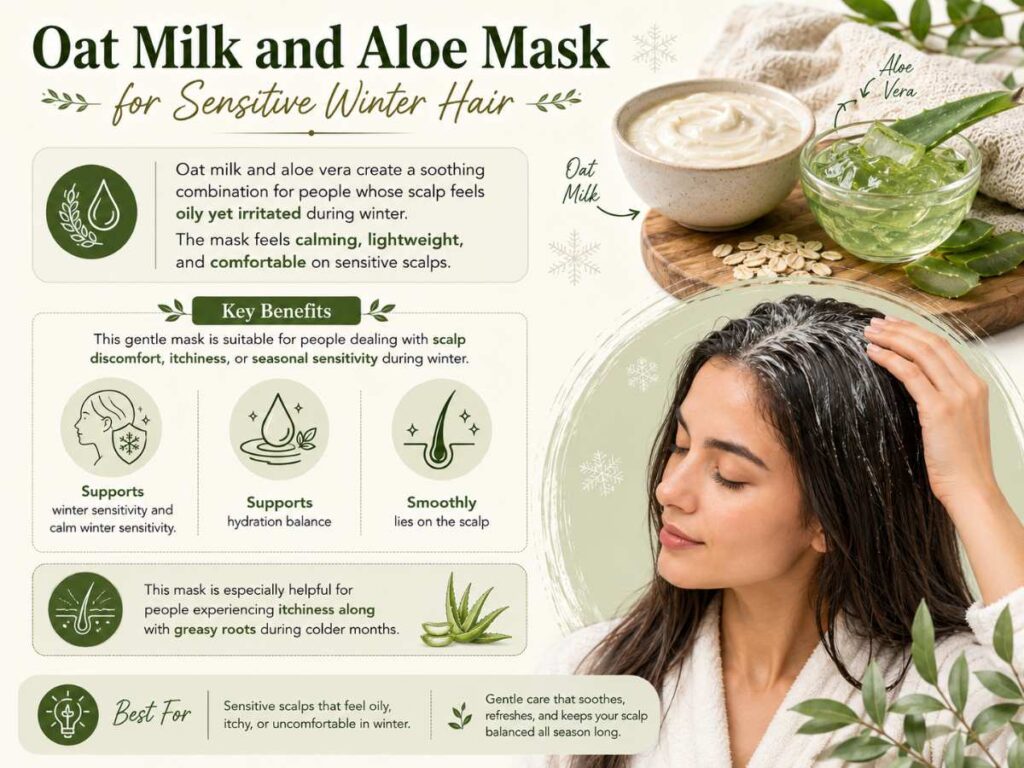
Oat milk and aloe vera create a soothing combination for people whose scalp feels oily yet irritated during winter. The mask feels calming, lightweight, and comfortable on sensitive scalps.
Key Benefits
This gentle mask is suitable for people dealing with scalp discomfort, itchiness, or seasonal sensitivity during winter.
- Supports winter sensitivity and calm winter sensitivity.
- Supports hydration balance
- Smoothly lies on the scalp
This mask is especially helpful for people experiencing itchiness along with greasy roots during colder months.
Common Mistakes People Make with Hair Masks
Even the best hair mask won’t be as effective if you don’t use the proper method.
Applying Masks Directly to the Scalp
Unless designed specifically for scalp use, masks should be primarily about the length.
Better Application Technique
- Use lightly, only on roots if necessary
- Focus product on mid-lengths and ends
- Avoid excessive layering
Leaving Masks On Too Long
The more time, the better the results can be. A buildup and greasiness can result from overuse.
Using Heavy Oils in Winter
- During the colder seasons, when hair is already flat, heavy oils can weigh hair down even more.
- When determining the right kind of hair mask to use for hair that is oily, it is important to take care to balance nourishment.
Winter Hair Care Routine for Balanced Hair
Hair masks are more effective when used with a regular treatment program.
Wash Hair with Lukewarm Water
Hot water may dehydrate and irritate the scalp.
Use Lightweight Conditioners
Larger conditioners can make hair flat and oily.
Avoid Excess Heat Styling
Excessive heat styling will weaken hair in already dry winter lengths.
Simple Winter Hair Habits
- Regularly cut back split ends.
- Install softer pillow slips.
- Avoid overwashing
- Protect hair outdoors
These habits will help you make your hair mask for an oily scalp work for you.
Myth vs Fact: Oily Scalp Edition
| Myth | Fact |
| An oily scalp means hydrated hair | Hair lengths can still be dry |
| Heavy oils fix winter dryness | They may worsen scalp buildup |
| Daily washing solves the grease problem | Overwashing can increase oil production |
| Hair masks are only for dry hair | Balanced masks help combination hair, too |
How Essensuals Salon Approaches Seasonal Hair Balance
At Essensuals Salon, the main concern of hair care during the winter months is achieving a balance between hydrated hair and a healthy scalp. Dryness is not treated uniformly but is studied by experts in order to assess the condition of the scalp and hair porosity, as well as seasonal issues, before providing a treatment.
Every recommendation is individual hair-specific, from light nourishment therapies to scalp-balancing treatment. This hair mask for oily hair targets the oily scalp and is a personalised method that guarantees softness while keeping freshness.
Final Thoughts on Managing Oily Roots and Dry Ends
The key to getting a good hair mask for oily scalp issues in winter is balance and not excess moisture. A light, strategic and regular application and care routine can make all the difference in terms of comfort and texture of the scalp and hair.
Avoid using products that are too heavy for your locks, and instead of using products with heavy ingredients, look into ingredients that will nourish your hair without being too heavy. When it comes to winter hair care, the key is to care for your scalp and hair in different ways.
With the seasonal weather continuing to change and impact the health of hair, maintaining a healthy and manageable mane is even more crucial during winter, and the need for balance and personalised care can’t be overlooked.
Ready to Give Your Hair the Seasonal Care It Deserves?
Visit Essensuals Salon for personalised hair consultations and expert winter hair care solutions tailored to your scalp and hair texture.
FAQs
1. Which is the ideal winter hair mask for an oily scalp?
During the winter months, when the skin is dry, the ideal hair mask for oily scalp moisturises dry locks without giving roots an oily feel. Jolly ingredients such as aloe vera, yoghurt, green tea, and argan oil go particularly well since they nourish the hair softly and assist to keep the equilibrium of the scalp. Heavy masks are not usually recommended around the scalp area.
2. Why is there an oily sensation to my scalp with dry ends in my hair?
The reason for this is that the scalp is naturally oily, and the hair loses moisture at a greater rate during winter. Dryness is exacerbated by cold temperatures, indoor heating and overwashing at the ends. Oil production at the scalp is proceeding as usual, resulting in a shortage of dehydrated lengths and an excess of greasy roots.
3. How many times a week should I use a hair mask during the winter season?
During winter, most people can benefit from having a hair mask once or twice a week. If you have oily roots, overuse of masks can result in buildup. For oily scalp troubles, a light hair mask is ideal and should be applied primarily to the lengths so as to keep the balance of the hair in check, without making it too greasy.
4. Does an oily scalp become more of an issue in the winter?
Winter can sometimes cause an imbalance in the body’s system. People might overwash their hair when they are dry from indoor heating or colder weather, leading to more oil production. Meanwhile, hair lengthens and dries, which is why it is crucial to practice a balanced hair care regimen all winter long.
5. Should hair masks be used on the scalp?
Not always. Most hydrating hair masks are formulated primarily for mid-lengths and ends, and not for oily roots. Thick products may cause buildup and an oily scalp. A targeted scalp treatment for oily scalp works by nourishing the dry scalp while maintaining a lighter and fresher scalp.
6. With an oily scalp, which ingredients are to be avoided?
Those who have oily roots should be cautious about using rich butter-based products, particularly when applied to the scalp. Oily hair products or formulations with too much silicone can cause hair to feel oily sooner. Low-weight ingredients tend to perform better in keeping ingredients soft and without excess build-up in cooler winter seasons.
7. Does an oily scalp get worse with overwashing?
Yes, overwashing hair can remove the natural oils and lead to an increase in oily scalp production. This can lead to a vicious cycle of oily skin. A balanced hair mask program, combined with gentle shampoos, can frequently help to increase the comfort and manageability of the scalp in the long-term.
8. Can professional salon treatments resolve issues with oily scalp and dry lengths?
Professional treatments can be extremely useful, as they are tailored to the condition of the scalp and hair texture. At a salon such as Essensuals Salon, they evaluate specific issues and prescribe treatments to the hair or scalp to balance it. This personalised treatment will help to make the hair softer, lighter and healthier-looking in the winter season.
9. What are the symptoms of an unbalanced scalp?
Symptoms include excessive grease just after washing, itching, flaking, dull-looking lengths and rough hair. These signs might be a sign of an imbalanced scalp and hair treatment. With a good hair-care regimen and the right nutrition, you can slowly regain a healthier balance over the long term.
10. What are Essensuals Salon’s winter hair care tips?
Winter hair care products at Essensuals Salon are not one-size-fits-all but are aimed at the individual’s hair behaviour and hair condition. Personalised solutions according to the degree of dryness, oiliness and hair texture are recommended. Their balanced formula helps to keep the client’s lengths soft while also keeping the scalp clean and fresh.


0 Comments